AGENDA
6.30AM – REGISTRATION
7.10AM – CALL TO ORDER
MC: Tim McCready
7.15AM – WELCOME TO THE 12TH CHINA BUSINESS SUMMIT
Summit Chair: Fran O’Sullivan, Summit Co-Chair, Managing Director, NZINC.
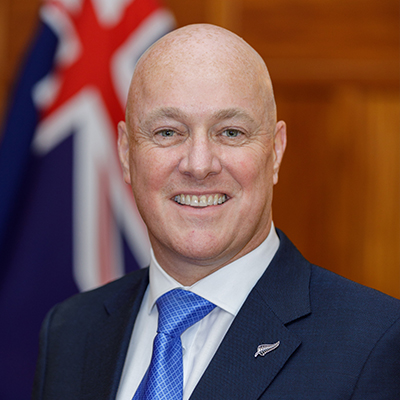
7.20AM – PRIME MINISTER’S OPENING ADDRESS WITH Q&A
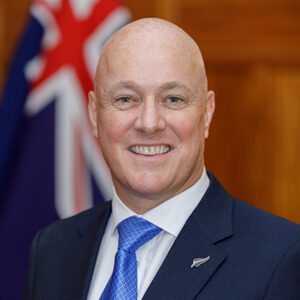
Rt Hon Christopher Luxon, Prime Minister of New Zealand
Christopher Luxon’s insights as prime minister into the challenges facing Governments and businesses alike beyond the impact of the fuel crisis will be invaluable. Particularly, as he plays that through to New Zealand’s relationship with its major trading partner, China, and the mutual inter-dependencies that are evolving in complex times.
Moderator: Fran O’Sullivan, Summit Co-Chair
8.00AM – VIEW FROM THE TOP
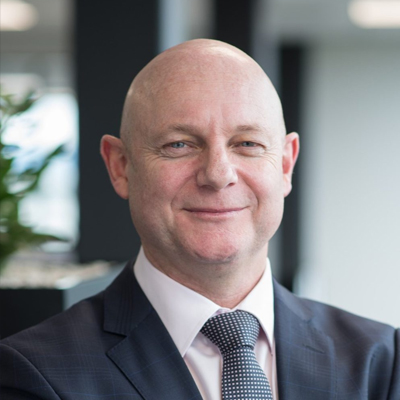
In a time of constant disruption, New Zealand’s leading exporters are recalibrating their China strategies. In this conversation, leading CEOs will share how their companies and organisations are navigating the fuels crisis, where China fits in their strategies and their outlook as global supply chains come under pressure.
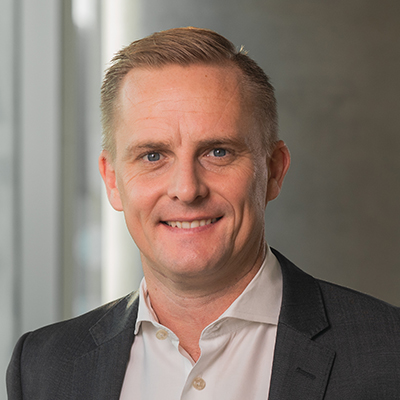
- Richard Allen, CEO, Fonterra
- Carrie Hurihanganui, CEO, Auckland Airport
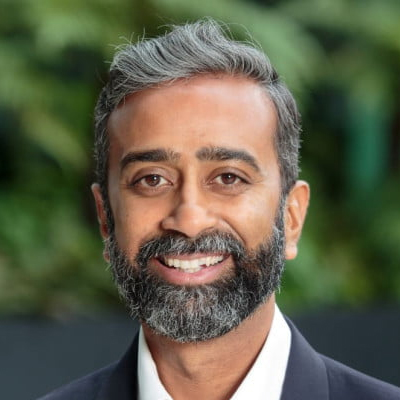
- Nikhil Ravishankar, CEO, Air New Zealand
- Ray Smith, CEO, Ministry for Primary Industries
Moderator: Fran O’Sullivan, Summit Co-Chair
8.50AM – FIRESIDE CHAT – DEEP DIVE INTO CRISIS
Cabinet Ministers Todd McClay and Shane Jones will be hosted by Auckland Business Chamber CEO Simon Bridges for a fireside chat. This will be a deep dive into the Government’s response to global fuel disruptions caused by Middle East conflicts – including a focus on strategic resilience, emergency diesel reserves, and a phased national rationing plan to protect the economy. This coupled with the maintenance of New Zealand’s strong links with China and an opportunity to scope how New Zealand business can leverage China’s technological and infrastructure developments.
- Trade, Agriculture and Investment Minister Hon Todd McClay
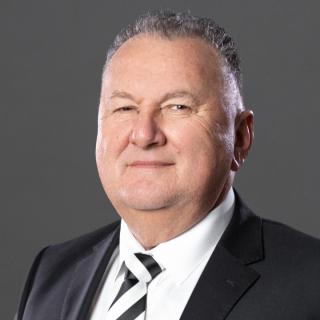
- Resources, Regional Development and Associate Energy Minister Hon Shane Jones
Moderator: Simon Bridges, Summit Co-Chair; CEO, Auckland Business Chamber
9.20AM – YEAR OF THE FIREHORSE
According to Chinese astrology, the Year of the Fire Horse occurs every 60 years. It is believed that the Fire Horse heralds an energetic year, with major societal shifts. As China races ahead in AI and advanced technology, it is also repositioning itself as a safe haven market and commodity anchor in a volatile global economy.
This session examines the hard economics behind the geopolitics. To unpack what this changing landscape means for trade, capital allocation, and business strategy in New Zealand and the wider region the summit is pleased to welcome back Raymond Yeung, Chief Economist Greater China ANZ, who leads an award-winning China research team based in Hong Kong and Shanghai.
Moderator: Fran O’Sullivan, Summit Co-Chair
9.50AM – HE Dr Wang Xiaolong, Ambassador to New Zealand
Ambassador Dr Wang Xiaolong will share his perspective on China’s economic outlook and the evolving nature of China–New Zealand engagement. As both countries respond to new challenges and opportunities across trade, innovation, and technological development, the Ambassador will outline areas for continued collaboration and reflect on how the relationship can remain resilient and forward-focused in the years ahead.
Moderator: Simon Bridges, Summit Co-Chair
10.15AM – The Productivity Challenge: Lessons and Opportunities from China
As New Zealand grapples with a longstanding productivity challenge, what opportunities exist to accelerate growth by drawing on China’s experience, capital markets, and world-leading infrastructure capabilities? Warren Hu, Chair of the China Chamber of Commerce in New Zealand will explore how deeper commercial engagement with China could help unlock investment, improve connectivity, and support New Zealand’s economic ambitions.
Moderator: Fran O’Sullivan, Summit Co-Chair
10.30AM – MORNING TEA
11.00AM – KEYNOTE: PROFESSOR DONG SUN, SECRETARY FOR INNOVATION, TECHNOLOGY AND INDUSTRY OF THE HKSAR GOVERNMENT – “INNOVATION IN AN ERA OF GEOPOLITICAL COMPLEXITY”.
Professor Dong Sun will outline how Hong Kong is positioning itself as an international innovation and technology hub at the centre of the Greater Bay Area, linking global capital and research with the manufacturing and technology powerhouse of Shenzhen and the wider Chinese mainland.
His address will explore opportunities for New Zealand companies, universities and research institutes to connect into Hong Kong’s innovation ecosystem through platforms including Hong Kong Cyberport Management Company and the Hong Kong Science and Technology Parks Corporation, with collaboration opportunities spanning artificial intelligence, biotech, smart cities, fintech, advanced manufacturing and green technology.
Moderator: Simon Bridges, Summit Co-Chair
11.30AM – NAVIGATING GREAT POWER COMPETITION
As Xi Jinping and Donald Trump redefine the global strategic landscape, New Zealand and Australian businesses are being drawn into a more contested and unpredictable Indo-Pacific. From Taiwan and the South China Sea to tariffs, sanctions, trade coercion and “weaponised interdependence”, both Beijing and Washington are reshaping the rules of commerce, security and global influence.
This session cuts through the rhetoric of “Great Power Competition” to examine the real risks, pressures and opportunities facing businesses in an era of strategic rivalry, economic nationalism and geopolitical uncertainty.
Keynote Speaker: James Laurenceson, director of the Australia-China Relations Institute at the University of Technology Sydney.
Discussant: Sam Sachdeva, Associate Editor at Newsroom NZ and author of The China Tightrope: Navigating New Zealand’s Relationship with a World Superpower.
Moderator: Suzannah Jessep, CEO, Asia New Zealand Foundation
12.00PM – LUNCH & NETWORKING
1.00PM – CHINA POWERS UP: GREENTECH AND AI
China’s leadership in this space is increasingly visible in New Zealand: Chinese EVs are a growing presence in our new vehicle market with the fuel crisis increasing the growth appetite. Chinese-manufactured panels underpin much of our solar build-out, and Chinese AI models are increasingly part of the business toolkit.
- Warren Willmot, General Manager, BYD Auto
- Meili Lin, Managing Director, Astronergy Solar Australia
- Kevin Hart, CEO, New Zealand Wind Energy Association
- Andy Shi, Country Manager, Alibaba Cloud Australia & New Zealand
- Moderator: Felicity Roxburgh, Executive Director – New Zealand International Business Forum
2.00PM – STRATEGY DEEP DIVE
We will hear from New Zealand business leaders who have been on the ground in China on how they are rising to the challenge of operating in a rapidly changing domestic environment. This session – which is a highlight of the summit – will be led and moderated by Steve Jones, NZTE’s Trade Commissioner in Shanghai.
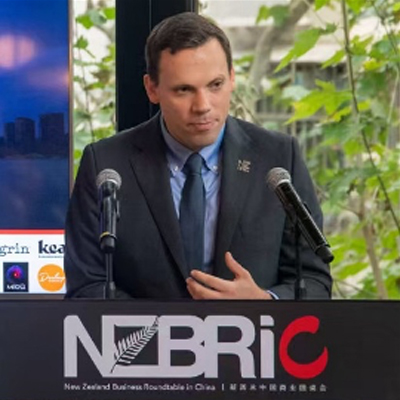
Steve Jones will open the Deep Dive session alongside Nicholas Calder, Executive Director of the New Zealand Business Roundtable in China, who will share NZBRIC’s latest survey results.
Steve Jones will then talk strategy with the leaders of three NZ companies engaged in the China space.
- Julia Matthews, Founder, Two Islands
- Grant McBeath, CEO, Rockit Global
- Martin Bremner, VP APAC, Unipharm
3.00PM – AFTERNOON TEA
3.30PM – INVESTMENT PANEL
Relationships, brands and bricks and mortar – what it takes to succeed in bilateral investment.
- John Chow, Co-Founder, Stonewood Group
- Michael Fox, Head of Global Public Affairs, Zespri
- Moderator: Simon Bridges, Summit Co-Chair
4.00PM – NEXT STEPS
What does the next chapter of the New Zealand-China relationship look like, across tourism, trade and wider relations – and what do we need to do to make the most of it?
- Hon Louise Upston, Minister of Tourism
- Hon Damien O’Connor, Labour trade spokesperson and former Trade Minister.
- HE Mayor Wayne Brown
- Lisa Li, CEO, China Travel Service
- Moderator: Tim McCready, MC
4.35PM – SUMMIT SUMMARY
Alistair Crozier, Executive Director, New Zealand China Council, joins Summit Co-Chair Simon Bridges.
4.40PM – PRIZE DRAW & SUMMIT CLOSE
Prize Draw courtesy of Air New Zealand, Silver Fern Farms and BYD.
- Shaughan Woodcock, Event Director, Auckland Business Chamber
- Sam Winstanley, Corporate, Government & SME Sales Lead, Air New Zealand
- Tim McCready, Summit MC
4.45PM – SUMMIT CLOSE